
Sustainable food & beverage production: balancing environmental impact, compliance, and performance
Operating successfully and sustainably in the food and beverage industry in the 2020s has become a juggling act for producers that involves constantly tackling three key challenges – keeping them all in the air, on the move, and not letting one fall!
DATE 2026-09-29Because in delivering the products to keep a growing global population fed, companies must now also keep a focus on managing their environmental impacts, ensuring compliance with a host of tightening regulations, and all the while, keep their level of operational performance maximised.
On top of this, they are also operating in a world already witnessing the dramatic impacts of climate change, which touches upon everything from the supply of raw materials to the availability of water and energy to carry out the processing fundamentals.
It is no easy feat, and the hard reality for producers is that taking their eye off any one of these issues and letting it slip means that the overall sustainable success of their business comes tumbling to the ground.
In an industry that is worth USD 9.79 trillion in 2026 – and expected to grow to USD 11.78 trillion by 2031 – where competition is fierce and market trends are continually shifting, the support of an expert partner can be absolutely fundamental in ensuring a laser-like focus on all three of these challenges. (https://www.mordorintelligence.com/industry-reports/food-and-beverage-market)
This is where Alfa Laval, and its unmatched expertise across the many processes and systems that make up the food and beverage industry, comes into its own.
Having built up its global reputation for multi-sector excellence over more than 140 years, Alfa Laval is ideally placed to ensure a dynamic processing operation where all three challenges are continually tackled, to deliver the successful and sustainable operations that all good producers crave.
Environmental impact
The environmental effects of food and beverage production begin with the major impacts of agriculture, and continue through into the processing operations.
With the food demand growing from a global population that is set to hit 10.3 billion by the mid-2080s, it is imperative that producers leverage all possible tools at their disposal to minimize these impacts of water and energy use, waste generation, and CO2 emissions.
Alfa Laval supplies the tools alongside widespread expertise and an ingrained drive to operate sustainably, which ensures that these tools are shaped and refined to deliver for the specific processing task at hand.
So, when it comes to water use in cleaning processes, for example, there is pioneering technology available that is designed precisely to minimize water and chemical use at every point.
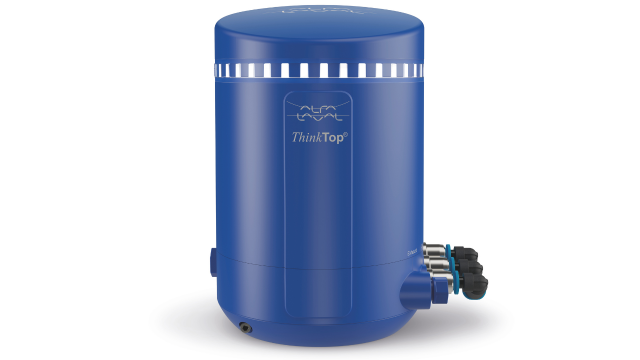
And sometimes the biggest impacts can be made by equipment that comes in small packages, such as the technology embedded in Alfa Laval’s ThinkTop pulse seat clean for drain valves, which can save up to an impressive 95% in cleaning-in-place (CIP) liquid.
In a typical food and beverage processing plant, the drain valves will make up around 20% of all the valves in the line, but cleaning them can be a water-intensive and costly business.
The ThinkTop technology is unique to Alfa Laval and has already been working on mix-proof valves since 2019, with the latest upgrade extending its performance to the drain valve system.
The ThinkTop sensing and control units manage the cleaning valves of the system by delivering ultra-targeted bursts of CIP solution to clean equipment, producing outstanding water and chemical savings.
Each burst takes less than a second, preventing pressure shocks in the system, but allowing for the outstanding hygienic performance necessary for food and beverage production.
It is this type of innovative and precise thinking that keeps Alfa Laval ahead of the game and shows its adeptness at analyzing processes and identifying those points at which sustainability boosts can be implemented.
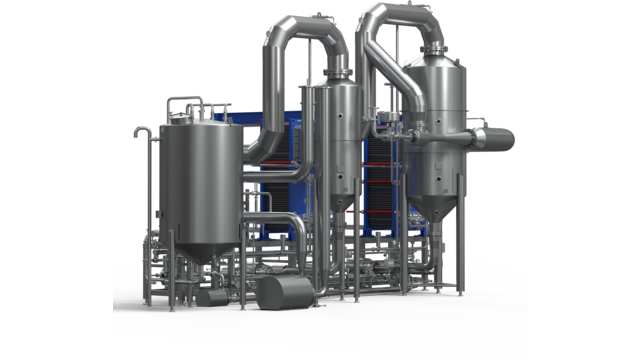
Evaporating systems, for example, can be highly energy intensive, but equipment such as the AlfaVap rising film evaporator delivers significant energy savings.
Its mechanical vapour recompression (MVR) technology creates an energy loop that makes it possible to capture the steam made during boiling, compressing it to make it hotter and under a higher pressure, and then reusing the steam to heat the next batch of product.
Alfa Laval also understands the sustainability importance of cutting waste – not only in terms of saving on disposal costs and impacts, but also in the maximization of raw materials to boost yields and profits.
That’s why its decanters are among the highest performing that can be found, designed to maximize the recovery of raw materials with high-grade stainless steel for all parts in contact with the separation process and high-stress, high-strength rotating components.
Compliance
The compliance requirements in the food and beverage sector are among some of the tightest in any industry, with organisations such as the Food and Drug Administration (FDA) and the voluntary 3A standards setting a high bar for safety, quality and hygiene.
The protection of the public is also at the top of Alfa Laval’s agenda, and it works closely with its customers to not only ensure its equipment easily reaches the compliance standards for the processing tasks it is carrying out, but also that this compliance can be robustly evidenced to regulators.
Where applications demand particularly high hygienic standards, for instance, the Foodec Hygiene Plus series is designed with a range of features carefully engineered to ensure optimal hygiene levels alongside more efficient cleaning processes, such as precisely positioned drainage holes and an integrated (CIP) bar.
Knowing that every food process is different, Alfa Laval is careful to include optional extras that can push hygiene levels even higher for certain applications and ensure regulatory compliance.
TrueStainlessTM ensures that solid stainless steel is used for the frame and other key parts operating in corrosive environments, leading to optimal hygiene, while SaniRibs® are welded ribs that create optimal friction, resulting in better solids transportation and eliminating pathogen hotspots to simplify cleaning even further.
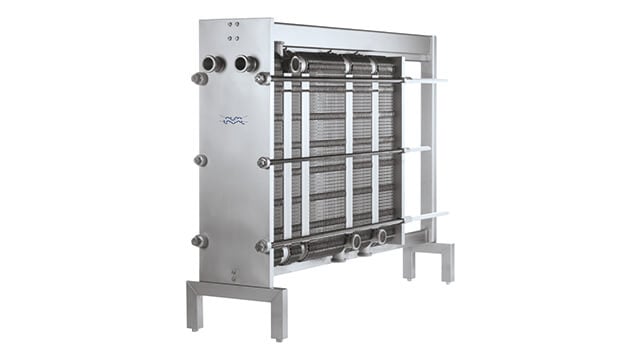
Meanwhile, when it comes to pasteurization and sterilization, processes, used in applications from milk and cheese production to liquid egg processing and bottled water treatment, the Frontline heat gasketed plate heat exchangers are designed with compliance very much in mind.
The many features include an integral glue-less gasket system that provides for long gasket life, made with FDA-compliant materials, and frames that meet all 3A sanitary requirements.
Alfa Laval also offers robust compliance packages to customers across the Food and Beverage spectrum where equipment will be analysed and verified, with detailed inspection reports and condition monitoring.
All of this will be supported by detailed documentation to satisfy regulators and give customers peace of mind, and the range of materials evidencing compliance ranges from food hygiene to raw material traceability and emissions reporting.
Performance
For food and beverage producers, there are no trade-offs to be made when balancing the three key issues facing the industry.
It is not a case of ‘or’; it is a case of ‘and’, and while delivering minimized environmental impacts and compliance across a range of metrics, the performance of their operations has to be top-notch, delivering optimum yield with the best quality.
A partnership with Alfa Laval means a relationship with an expert who deals in precision and engineering solutions aimed at maximum purity and control in the processing, handling raw materials and the different stages of processing with the gentlest of touches where required to ensure the integrity of the final product.
One glance through Alfa Laval’s portfolio of decanters, for instance, showcases a range that has been refined and optimized for maximum quality and yield and targeted at specific food or beverage production. They are able to handle varying feed rates, solids concentration and temperatures, and are adaptable to a wide range of food processing challenges.
Meanwhile, when it comes to heat exchangers, a unit like the Contherm Max is changing the game for performance in high fouling and viscous applications, like fruit or vegetable puree pasteurization or the heating and cooling of prepared sauces.
This double-wall heat exchanger unit has a large surface area that offers triple the production capacity of conventional single-wall designs. And while the yield is boosted, so is the quality, as low rotational speeds ensure gentle product treatment ideal for shear-sensitive products with particulates up to 25 mm in size.
Food and beverages into the future
The future is upon the producer all too quickly in food and beverage production, but customers can still rely on Alfa Laval to be ahead of the game.
It is important not to be playing catch-up in areas such as compliance as we march towards the end of the decade. Any slip or lack of awareness could have unforeseen and major impacts, but Alfa Laval can provide reassurance that the customer will remain up to speed as regulations tighten to protect the under-siege environment and ensure that safety is not compromised as production is stepped up to feed the growing population.
By the time we reach 2030, even, it is likely that the sustainability landscape will have shifted significantly and areas such as aseptic packaging and new-generation proteins will have taken steps forward.
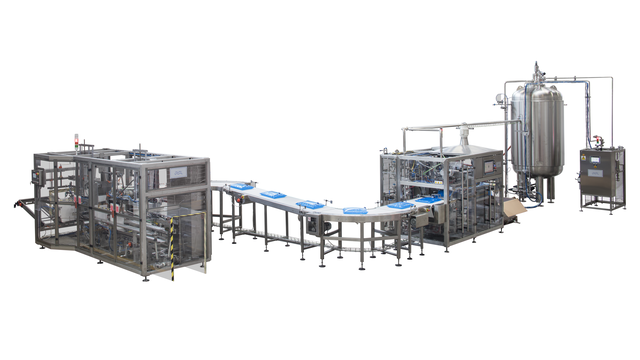
Alfa Laval is already there, with a broad sustainable packaging portfolio of aseptic bag-in-box fillers that preserve product quality, sterility and shelf life. Products remain commercially sterile with pre-sterilized packaging and clean closures.
And when it comes to the next generation of food, Alfa Laval is constantly innovating and adapting technologies from other industries such as pharma to look at new ways of fermenting and separating with techniques such as nanofiltration, ultrafiltration and reverse osmosis.
And through the transformations that loom in the industry, the balancing act will still be ongoing, with Alfa Laval there as an expert partner to help their customers navigate these changes and operate sustainably by managing environmental impact, complying with ever stricter regulations, and performing operationally to the highest possible standards.
Tags
Alles